Stakeholder Management for Product Managers: How to Get Decisions Made

The most common failure mode in product management isn't poor research or bad roadmaps. It's good work that doesn't move because the PM didn't get alignment from the people who can block it.
Stakeholder management is the skill that separates PMs who ship from PMs who are perpetually in review cycles.
The tricky part: product managers have real responsibility but almost no formal authority. You can't order engineering to build something, can't override a sales leader's objection, can't force legal to approve a privacy change. You have to influence without authority — and that requires a different set of tools than most PM training covers.
Map Your Stakeholders Before You Start
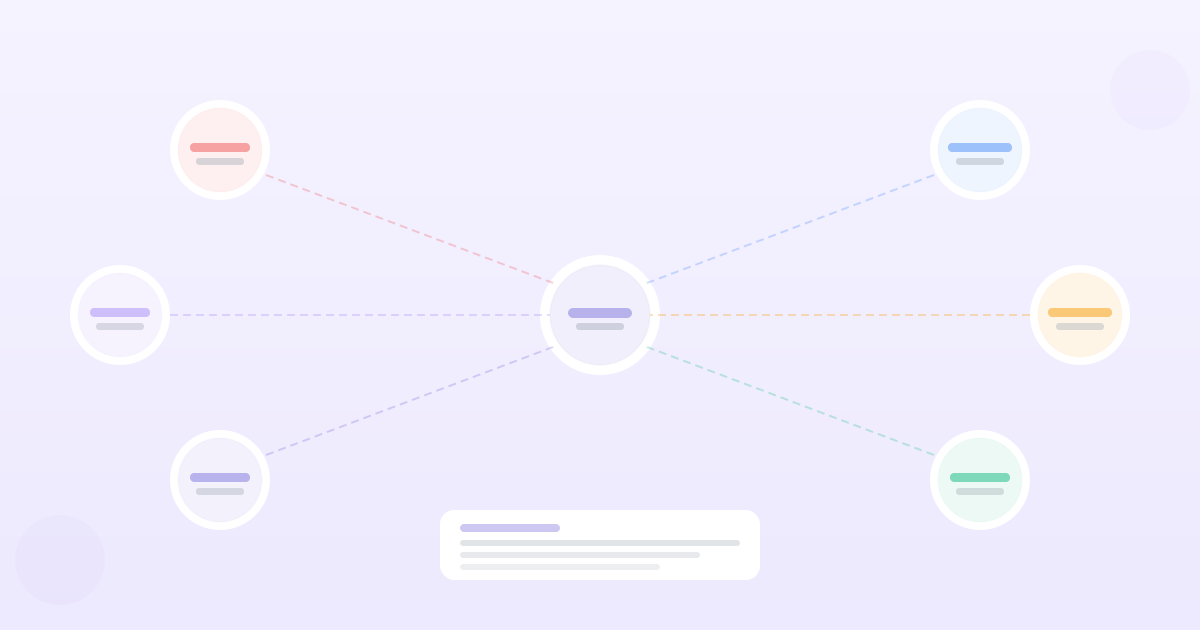
Every feature or initiative has a different stakeholder landscape. The stakeholders for a pricing change are different from the stakeholders for a technical infrastructure project, even at the same company.
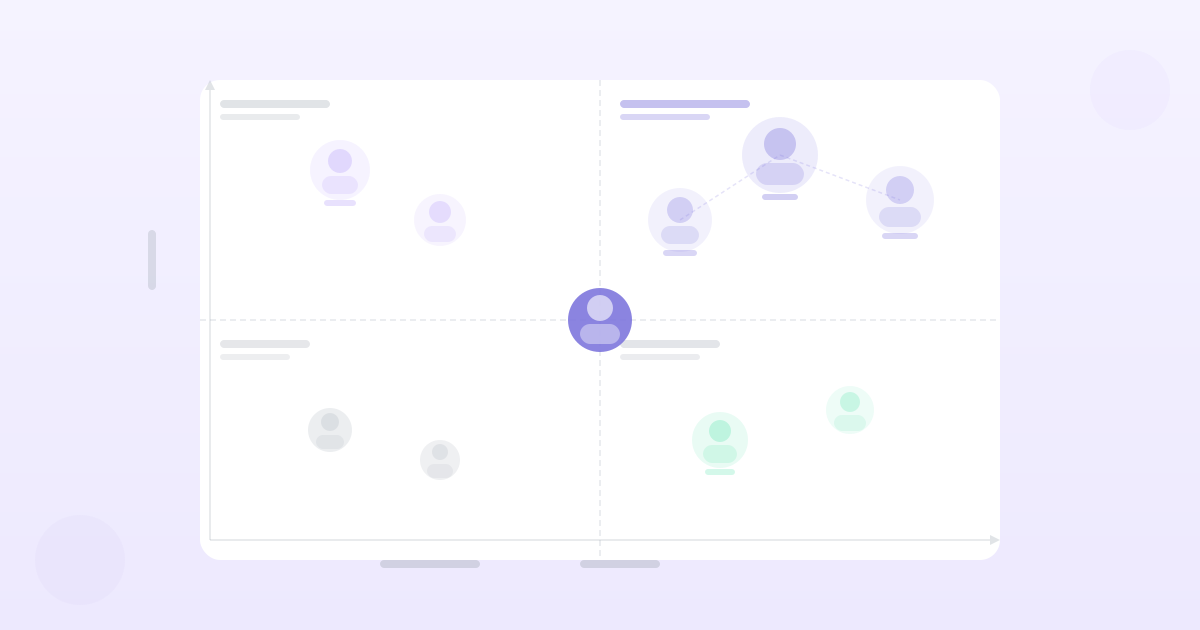
For any significant initiative, map four dimensions:
Power — Who can block this? Who has veto authority? Who needs to sign off before this ships?
Interest — Who cares about this outcome, positively or negatively?
Influence — Who do other stakeholders listen to? This is different from formal authority. A senior engineer who the CTO respects, or a sales rep who has the ear of the VP of Sales, wields influence without formal power.
Information — Who has data or context you need? Who's closest to the customer problem in this area?
A stakeholder map template plots these four dimensions and tells you: who needs active management (high power, interested), who needs to be kept informed (high power, low interest), and who is a valuable input but not a decision-maker.
The mistake most PMs make is treating all stakeholders the same way. The VP of Engineering who can kill a feature requires a different approach than the data analyst who will help instrument analytics.
The Pre-Meeting Is the Real Meeting
Most decisions are made before the formal meeting. The formal meeting is where decisions are announced.
If you go into a leadership review without knowing how each person in the room is leaning, you're flying blind. If the CFO is going to raise a cost concern, you want to know that before you're in the room — not when you're presenting to six people and need to respond on the spot.
The pre-meeting conversation does three things: it gives you information about objections you'll need to address, it gives stakeholders a chance to raise concerns privately (which is often easier than publicly), and it builds the working relationship that makes future decisions smoother.
For any decision that involves more than one or two stakeholders, run pre-meetings with each of the key decision-makers before the group session. "I wanted to talk through the proposal before our team meeting — I'd value your perspective on X" is all you need to say.
Translating Across Stakeholder Languages
Different stakeholders need different framings of the same information.
Engineering: Specificity, technical scope, trade-offs, what you know vs. what you're still figuring out. Engineers trust PMs who demonstrate they understand complexity — not PMs who oversimplify. If you don't know the technical approach, say so, and ask for input.
Sales: Revenue impact, customer impact, competitive differentiation. "This feature addresses the most common objection in enterprise deals" is a sentence that gets sales teams engaged. Abstract product vision is not.
Finance: ROI, cost, payback period, risk. Finance stakeholders are trained to look for assumptions. Be explicit about your assumptions and what would need to be true for your projection to hold. Don't hide uncertainty — naming it builds credibility.
Executives: Context, recommendation, and decision needed. Not a deep walkthrough — a clear problem, a clear recommended action, and a clear ask. If you need an executive to make a decision, make the decision explicit: "I need your sign-off on X by Friday so we can proceed."
Legal / Compliance: Risk surface, precedent, documentation. What data is involved, where it lives, how it's used. Legal stakeholders are rarely trying to block things — they're trying to understand the exposure. Give them what they need to assess it.
Managing Disagreement
The hardest stakeholder situations aren't when people are passively uninterested — they're when someone actively disagrees with your recommendation.
Start by understanding the disagreement fully. "What specifically concerns you about this approach?" is a better question than defending your position. Sometimes the concern is the same as yours, framed differently. Sometimes it reveals information you didn't have.
Separate preference from requirement. A sales leader who prefers a different feature sequence may not actually be blocking you — they may just have a preference. Understand whether the disagreement is "I'd like this differently" or "I won't support this unless it changes."
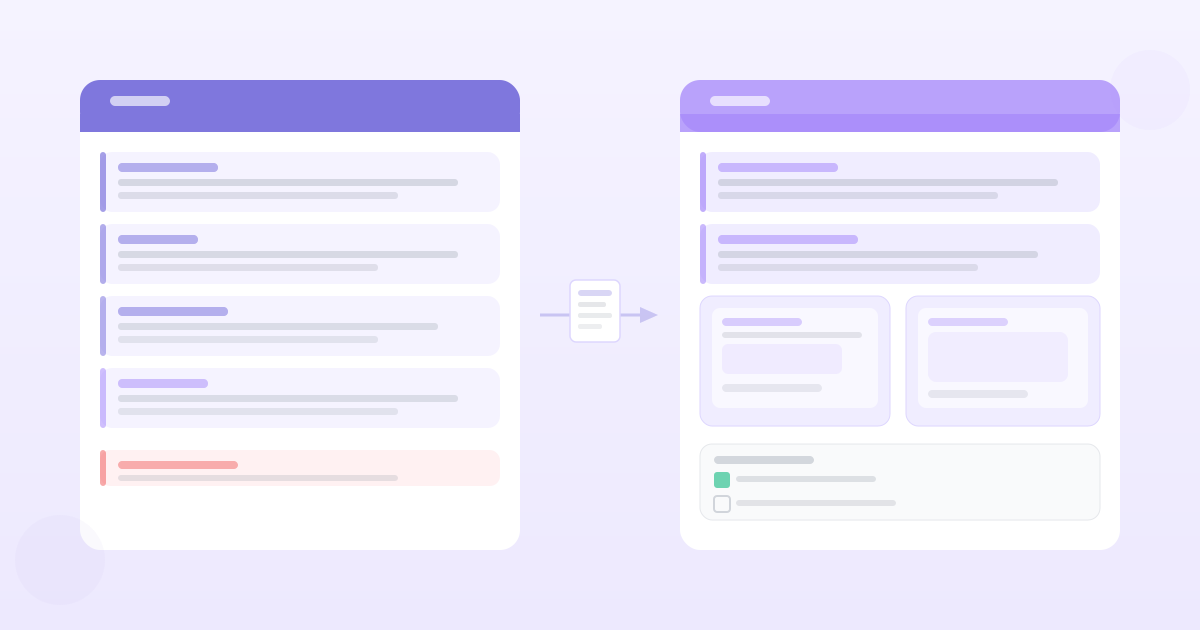
Put competing options in writing. "Here are the three approaches I've considered, the trade-offs of each, and my recommendation." This is much more useful than a back-and-forth conversation, because it makes the choices explicit and gives people something concrete to respond to.
Escalate correctly. When you genuinely can't resolve a disagreement at your level, escalate — but escalate as a decision request, not as a complaint. "We have a genuine disagreement between the product team and sales about priority X. I'd like to bring it to [manager/skip-level] as a decision to make." Not "Sales is blocking us."
Keeping Stakeholders Informed Without Meetings
A common PM mistake is using meetings as the primary mechanism for stakeholder communication. This creates meeting load and still leaves people feeling uninformed.
What works better: a regular, consistent written update that people can read in 3 minutes. Weekly for active projects, monthly for everything else.
The format that gets read: one paragraph of what happened, one paragraph of what's next, one line for anything that needs a decision.
What gets ignored: slide decks, lengthy written documents, updates that require action to understand.
Over-communicate during launches, under-communicate during stable periods. Stakeholders who are surprised by problems become stakeholders who demand constant updates. Stakeholders who are proactively informed tend to trust you enough to let you work.
Influence Without Authority in Practice
The foundation of influence without authority is trust, and trust is built on a track record of being right, being honest about uncertainty, and following through on commitments.
The PMs who have the most influence aren't the ones who are most assertive in meetings. They're the ones whose judgment has been proven correct enough times that other people want their input before making decisions — not just during formal review.
That reputation is built call by call, PRD by PRD, launch by launch. The best investment in stakeholder management is doing the work well enough that people notice.
Use the Stakeholder Map Template to plan your stakeholder engagement before your next significant initiative.
Want PRDs grounded in your actual customer data?
PMRead ingests your interviews, Slack threads, and feedback files — and generates PRDs backed by real evidence, not guesses.
Try PMRead free →