How to Run a Competitive Analysis That Actually Changes How You Build

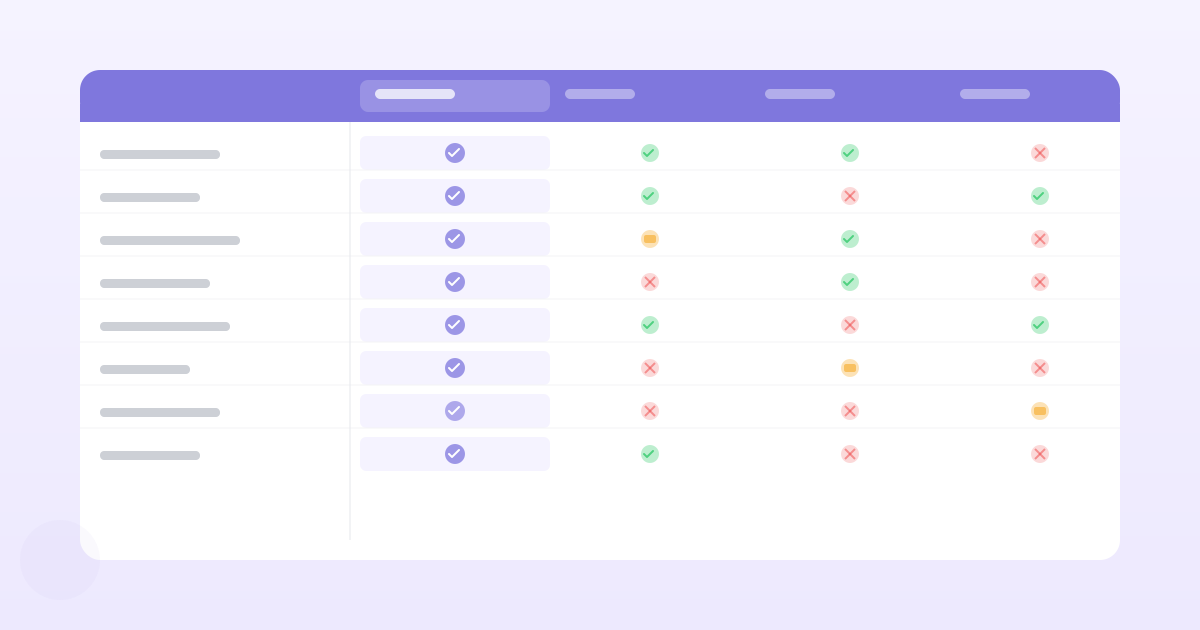
Most competitive analyses produce a spreadsheet with checkboxes. Feature A: ✓ ✓ ✗ ✓. Feature B: ✓ ✗ ✓ ✓.
Then the deck goes into a folder, the folder gets forgotten, and six months later someone asks "what does Dovetail do that we don't?" and nobody knows where to find the answer.
The problem isn't the format — it's that competitive analysis in most product teams is treated as a one-time research exercise instead of an ongoing input into product decisions.
Here's a competitor analysis framework that's actually useful: not for the pitch deck, but for the build decisions you're making this quarter.
Define Your Competitive Tiers First
Not all competitors are the same kind of threat. Treating them all equally is how you end up with a 40-column comparison table that obscures more than it reveals.
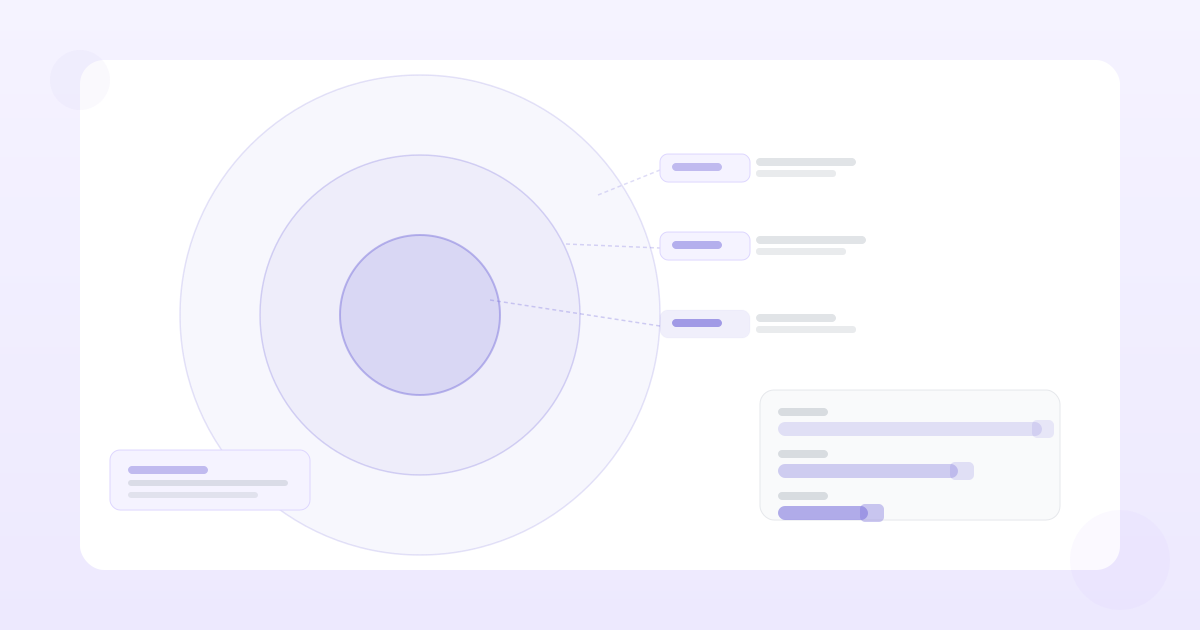
Tier 1 — Direct competitors. Products with the same ICP, the same core use case, and the same price range. These are the alternatives your prospects mention by name in sales calls. For a B2B analytics tool, this might be two or three others.
Tier 2 — Adjacent competitors. Products that solve an overlapping problem but for a slightly different segment or with a different approach. Users might use these alongside your product or choose them for different use cases.
Tier 3 — Indirect competitors and status quo. The spreadsheet, the Notion doc, the consultant, doing nothing at all. "What do users do today if they don't use us?" is almost always more useful than studying a Tier 3 competitor's feature list.
Focus 70% of your competitive analysis time on Tier 1 and on the status quo. Tier 3 is where you lose most deals.
The Seven Things Worth Knowing About Each Competitor
Stop trying to document everything. These seven dimensions produce decisions; the rest produces noise.
1. Target customer
Who are they actually winning with? Not their marketing copy — their actual customers. Look at their case studies, their G2 reviews, their job postings (which reveal their customer base through the experience they ask for), their LinkedIn followers.
2. Core value proposition
What do they position themselves as being the best in the world at? This is different from their feature list. Dovetail's value prop is "the system of record for customer insights." Productboard's is "the customer-centric product system." Different positioning attracts different buyers.
3. Where they're strong
Two or three things they genuinely do better than alternatives — not where they claim to be strong, but where customers say they're strong. G2 reviews and Trustpilot are more honest than their website.
4. Where they're weak
The one or two consistent complaints that appear in customer reviews, in churn interviews, in communities. These are your opportunities — but only if your target customer cares about those weaknesses.
5. Pricing model
Not just the price — the model. Per seat, per usage, flat rate, freemium with conversion gates, sales-led with custom pricing. The pricing model shapes who they can win and who you can win from them.
6. How they win deals
What's the sales motion? PLG? Sales-assisted? Enterprise-led? What does their sales team say on calls? (Sales reps from competitors often talk publicly; their messaging surfaces in communities and LinkedIn posts.)
7. What they're building next
Public roadmaps, release notes, job postings for engineering roles in specific areas, conference talks, blog posts. A company hiring five ML engineers and publishing posts about AI-powered analysis is probably building in that direction.
Gathering Competitive Intelligence
Use their product. Sign up for their free trial. Go through their full onboarding. Take screenshots and notes at every step. This is the most useful 2 hours you can spend on competitive analysis. Most PMs don't do it because it feels too simple.
Read the reviews, especially the negative ones. G2, Trustpilot, Capterra, App Store. Filter for 2-3 star reviews. These are customers who used the product enough to have real opinions. Look for patterns: what's mentioned in more than 3 reviews is a signal; what's mentioned once is an outlier.
Talk to churned customers. Ask them what they evaluated, why they chose the alternative, what they wish your product did differently. These conversations are worth more than any secondary research.
Follow their job postings. Companies about to build in a new area almost always hire for it 3–6 months before they ship. A competitor posting for a "Senior Engineer, Export and Integrations" is probably about to ship export and integrations.
Monitor their changelog. Most SaaS products publish a changelog or release notes. Follow them. A well-maintained changelog tells you what they ship and how fast.
How to Use Competitive Analysis in Product Decisions
Competitive research only matters if it changes something. Here's where it should show up:
In your positioning. Where are you explicitly different? Not "we're better" — specifically: "We do X differently than Competitor Y, and if X matters to you, here's why ours is the right choice." Positioning that doesn't acknowledge the alternative is just marketing copy.
In your PRD. A PRD for a feature that exists in competitor products should reference how those implementations work and how yours differs — and why. This context prevents you from building an inferior copy of something that already exists.
In your roadmap. Are you defending against a competitive threat? Differentiate further in the area where you're strong. Are you chasing a Tier 1 competitor's feature? Make sure you're chasing it because your customers want it, not because it looks impressive on a comparison table.
In your onboarding. Customers who come from a specific competitor often have specific mental models. If you know 40% of your signups are churned Productboard users, your onboarding should address the specific differences they'll notice.
Keeping It Current
Competitive analysis is perishable. A snapshot from six months ago isn't competitive intelligence — it's history.
Set a standing calendar event once per quarter to update your competitive profiles. Focus on: what have they shipped, what are they saying publicly, what are customers saying about them, has their pricing changed?
The competitive analysis template that actually gets used is the one that's short enough to update in 30 minutes per competitor, stored where the PM team can find it, and reviewed in product strategy sessions when roadmap decisions are live.
Download the free Competitive Analysis Template to get started with the framework above.
Want PRDs grounded in your actual customer data?
PMRead ingests your interviews, Slack threads, and feedback files — and generates PRDs backed by real evidence, not guesses.
Try PMRead free →